How Effective is Laser Tattoo Removal on Old Tattoos?
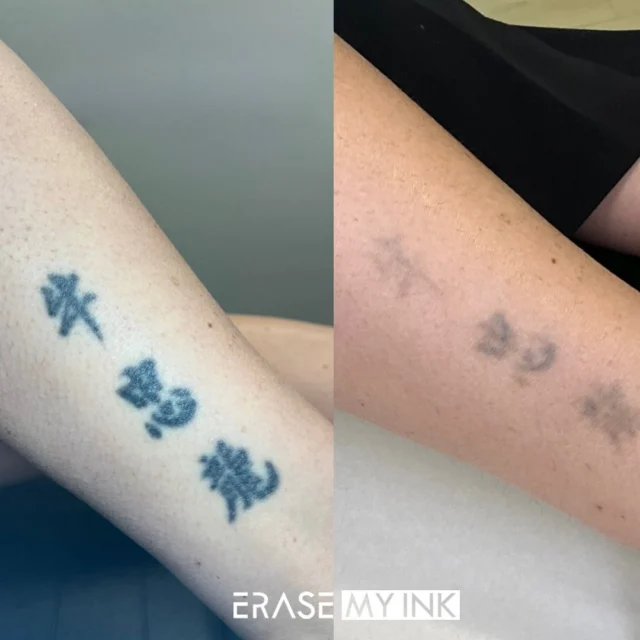
People get tattoos for various reasons, including significant events, personal expression, or special occasions. As time passes, however, tastes change, and some people choose that they don’t want to have their tattoos anymore. However, laser tattoo removal has become more common than ever thanks to the technological improvements made by the laser industry.
A frequently asked question is if laser tattoo removal is effective on an older tattoo. The bright side is that in most cases, older tattoos are receptive to laser tattoo removal. Although each tattoo is different, the color of the ink used, the size of the tattoo, the depth, the location, and the skin type will all have an impact on the outcome of the tattoo.
Knowing the basics of laser tattoo removal and what factors determine its effectiveness on old tattooed skin can help set realistic expectations prior to getting started.
How Laser Tattoo Removal Works
Laser tattoo removal involves pulses of laser light energy that focus on the pigment under the skin. The laser fragments the ink into smaller particles that can be slowly eliminated by the body’s immune system.
With each treatment, the tattoo will gradually fade, as additional ink particles will be broken down and filtered from the body. Tattoos are permanently inked under the skin, so there will be a number of sessions that are spaced weeks apart for complete fading.
With modern laser technology, several colors can be targeted with minimal damage to surrounding skin.
Why Older Tattoos Often Respond Well
While it is thought that older tattoos are easier to get rid of, there are some advantages to older tattoos when it comes to laser treatment.
The tattoo fades over time as the body continues to interact with the tattoo ink. The pigment may fade over time due to sun exposure, the natural turnover of skin cells, and a progressive deterioration of the pigment by the immune system.
Older tattoos may be more faded as there is less ink left to target with the laser. In some instances, this may mean that it can be easier to remove than newer tattoos that have rich, intense ink.
The Role of Ink Density
The density of the ink is the amount of pigment that was applied to the skin. Older tattoos that have faded a lot over the years may have less pigment visible than more recent tattoos.
Factors influencing ink density are:
- Tattoo age
- Original tattoo technique
- Ink quality
- Sun exposure
- Gradual change of color over time
Laser treatments may work better on tattoos that have faded a bit, as there is less pigment to destroy.
Color Matters
The color of the tattoo is very important in the removal process.
Some colors are more receptive to laser than others. Some of the colors that are easiest to target with the laser are black and dark blue inks.
Other colors will need more sessions, such as:
- Green
- Light blue
- Yellow
- Orange
- White
Many older tattoos are using simpler color sets and may be easier to treat than the more colorful tattoos of today.
Location of the Tattoo
The placement of the tattoo on the body may affect the time period of fading in laser removal.
Good circulation areas might facilitate the body’s natural clearance process better. These areas may contain:
- Chest
- Upper back
- Upper arms
If the tattoo is placed further away from the heart, for example, on the hands, feet, or lower legs, sometimes more sessions are needed.
Skin Type Considerations
A laser tattoo removal in Mississauga may also depend on the skin type. Today’s laser systems come in a range of different types, and skin tones vary, so settings can be adjusted to be both effective and safe.
A specialist will assess:
- Skin tone
- Tattoo characteristics
- Medical history
- Previous skin treatments
This evaluation is used to develop a personalized treatment plan.
What to Expect During the Process
Laser tattoo removal will generally be carried out in a number of treatments that are spaced out by several weeks.
During treatment:
- The laser is focused on the tattoo pigment.
- The ink particles are fragmented into smaller particles.
- Over time, the broken-down ink is slowly absorbed by the body.
- The tattoo gradually fades in color.
The majority of providers will say that it’s best to give the body plenty of time to heal between treatments to get the best results.
Final thoughts
If you have an older tattoo, tattoo removal in Mississauga can be a successful method of tattoo removal, and in some instances, age might actually work in the patient’s favor. Over time, ink may become less intense, making laser treatments more effective at targeting the remaining ink. The color, size, placement, and type of skin each play a role in the results, but older tattoos often benefit from the latest laser technology.
Although the outcomes are different for every person, many people have seen that laser tattoo removal can be an effective solution for removing unwanted tattoos. A consultation with a professional can assist you in deciding what the best course of action is and what you should be expecting, depending on the specific parts of the tattoo.
Most Read